The May 2026 Open-Weight AI Shakeup: Why Western Frontier Models Should Panic

The intelligence ceiling held this month, but the floor just dropped out on inference costs.
3 min read · 409 words
The intelligence ceiling held this month, but the floor just dropped out on inference costs.
In a 12-day window spanning late April into early May, four major Chinese AI labs released open-weight coding models. They didn't just ship incremental updates. They shipped models that rival Western frontier capabilities on agentic engineering benchmarks—at less than a third of the cost.
Here’s what just landed:
- Qwen3 Coder Next (Alibaba): An 80B MoE with just 3B active parameters. It natively supports a 262k context window and is specifically designed for local coding agents. It recently cleared 70% on SWE-bench Verified. You can run this locally.
- MiniMax M2.7: Just launched an M2.7-highspeed API version. It boasts ~229B parameters, self-evolving capabilities, and matches Codex on SWE-Pro.
- Kimi K2.6 (Moonshot): A 1T parameter MoE activating ~32B parameters per token. It sits at the top of the Intelligence Index for open frontier models.
- GLM-5.1 (Zhipu): A massive 754B parameter model that took the #1 spot on SWE-Bench Pro among open weights.
And let's not forget DeepSeek V4, which matched frontier capability on agentic engineering.
The Cost Tsunami
This isn't about scoring a few extra points on a leaderboard. It's about economics.
When you're building production AI agents, you aren't just making one call to an LLM. You're running task decomposition, guardrails, fallback chains, and verification loops. If every step in that chain costs you Claude Opus 4.7 prices, your unit economics are dead on arrival.
These open-weight releases change the math. You get competitive coding and reasoning capability at a fraction of the inference cost.
We are also seeing massive architectural shifts. SubQ just dropped a 1M-Preview model with a 12-million token context window, claiming subquadratic attention that's 52x faster at scale. InclusionAI shipped Ring-2.6-1T, another trillion-parameter MoE built explicitly for real-world agent workflows.
What This Means For You
If you're still treating AI as a thin wrapper around a single OpenAI API key, you're building a legacy system.
The gap on agentic coding between the US frontier (GPT-5.5, Opus 4.7) and the open-weight alternatives is shrinking fast. On cross-domain reasoning, there's still a roughly eight-month gap. But for writing code and executing agentic workflows, that gap is basically gone.
Stop overpaying for reasoning you don't need. Route your complex tasks to the frontier models, and push your agentic heavy lifting to these new open-weight powerhouses.
Are your agent architectures ready for multi-model orchestration, or are you still hardcoding gpt-chat-latest everywhere?

Bashar Ayyash (Yabasha)
AI Systems Architect for regulated industries — evals, harness design, AI security.
Bashar Ayyash is an AI engineer and dev lead in Amman, Jordan. 20 years shipping software, 4 years inside a regulated bank building production RAG and agent systems with evals, guardrails and monitoring — in Arabic and English. He writes at yabasha.dev and builds open-source tooling for AI-assisted development.
Newsletter
Practical AI + full-stack insights for MENA builders. No spam.
Related Articles

Findable Is Not Chosen — and That Résumé Won't Save You

The $18K Ceiling Breaker: Skills That Actually Move Your Number

Why My AI Prompts Are 12 Words Long — And Yours Should Collapse Too
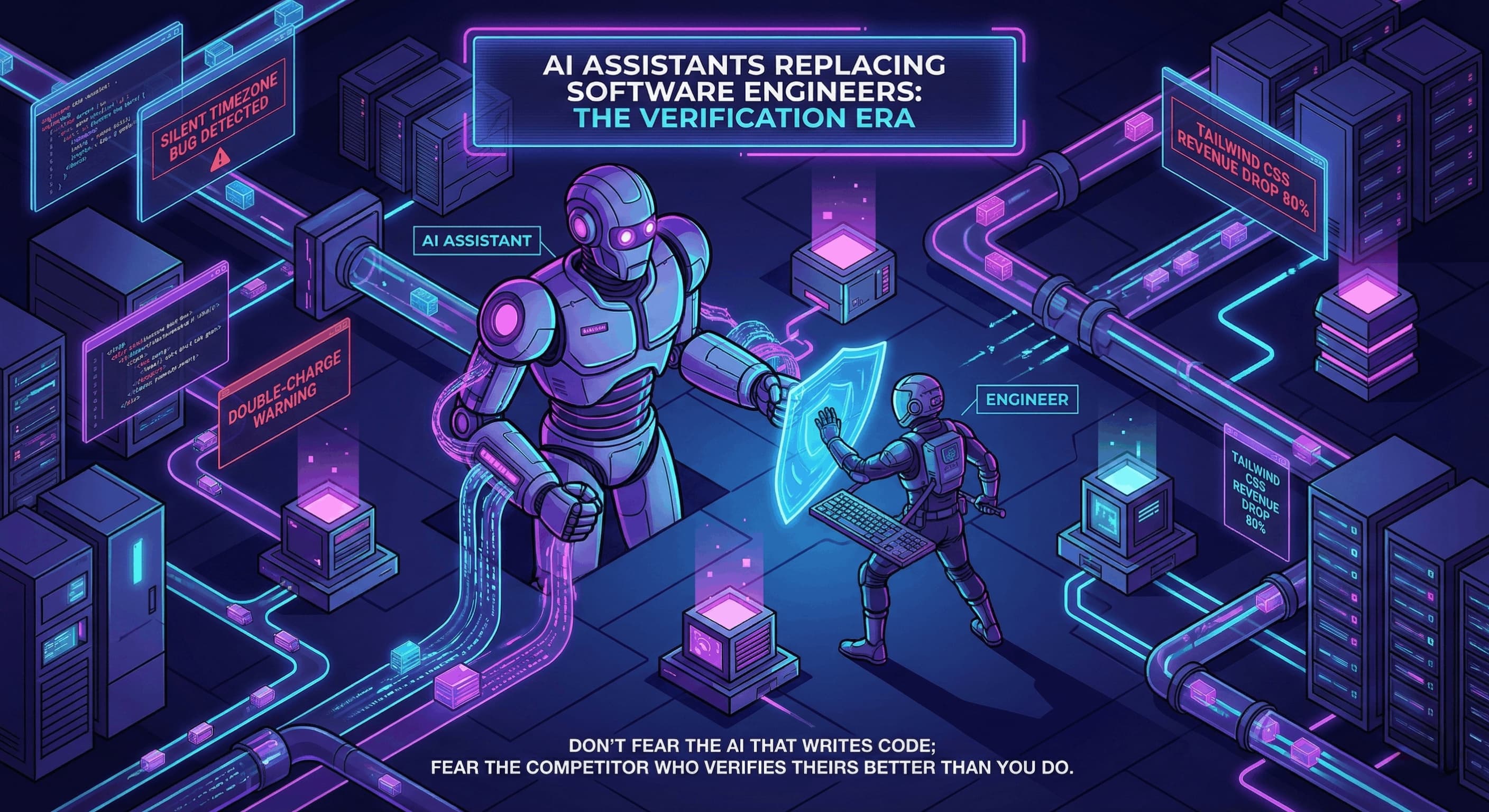
The Tailwind Tsunami: How a CSS Framework's Collapse Signals the End of Software Development as We Knew It
Read more on the blog
Browse the latest articles or explore the full archive.
AI Pricing & Open-Source Model Series
This post is part of a series on AI pricing and open-source model economics.
4 Models, 12 Days
Kimi K2.6, DeepSeek V4, GLM-5.1, MiniMax M2.7 showdown
ReadThe Pricing Chasm
Chinese vs Western cost floor analysis
ReadNo Single Model Wins
Why specialization beats consolidation for builders
ReadThe Collapse of AI Pricing Gravity
Why open-source shattered unit economics by 90-95%
ReadThe Pricing Gravity of AI
Anthropic's $900B valuation and scale economics
Read