The Pricing Chasm: How Chinese Open-Weight Models Are Eating the Cost Floor
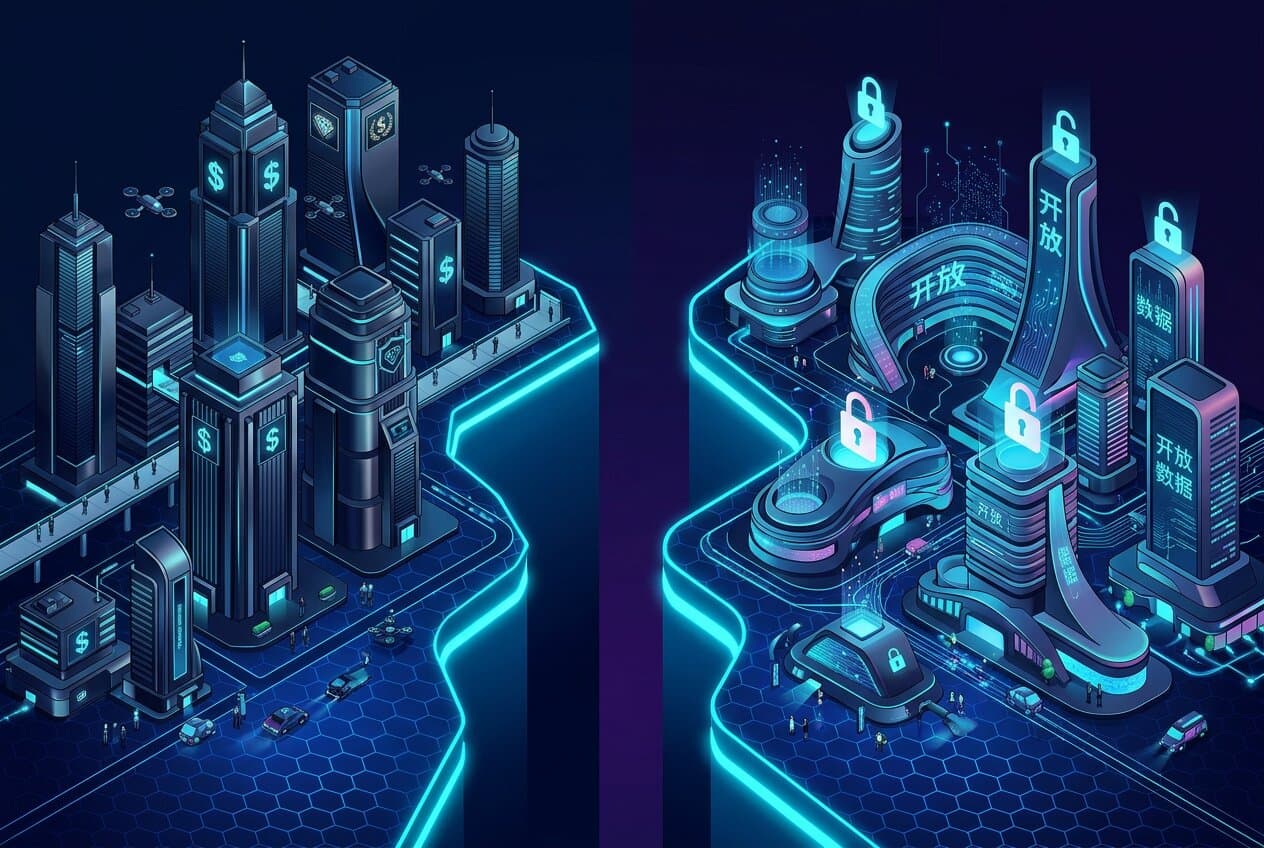
Chinese open-weight AI models are 10-100x cheaper than Western models while scoring within 6 points on coding benchmarks. DeepSeek V4-Flash costs $0.14/M tokens vs GPT-5.5 at $2.00/M.
4 min read · 606 words
The Pricing Chasm: How Chinese Open-Weight Models Are Eating the Cost Floor
Something broke in the AI pricing model last quarter. And nobody's talking about it the right way.
It's not that Chinese models got "good enough." It's that they crossed the frontier line — then undercut Western incumbents by 10-66x on per-token cost.
Here are the actual numbers from May 2026.
The Benchmark Reality
Let's start with what the benchmarks actually say. Not the marketing. The verified scores.
SWE-Bench Verified (real GitHub issues resolved):
- Claude Sonnet 5: 92.4%
- Kimi K2.6: 85.4%
- DeepSeek V4-Pro: 82.6%
- GLM-5: 77.8%
- Mistral Medium 3.5: 77.6%
- Qwen 3.5: 76.4%
Kimi K2.6 sits within 7 points of Claude Sonnet 5 — the most expensive model on the market. That's not a rounding error. That's a competitive threat.
SWE-Bench Pro (harder coding tasks):
- Kimi K2.6: 58.6% (beat GPT-5.4's 57.7%)
- GLM-5.1: 58.4% (held #1 for 9 days before Claude Opus 4.7 arrived)
- DeepSeek V4-Pro: 55.4%
- Qwen 3.6 Plus: ~52%
Two Chinese open-weight models scored within 6 points of the frontier. One of them held the actual #1 spot on this benchmark.
Continue Reading
The Cost Tsunami
Now pair those benchmarks with per-token pricing. This is where the story gets ugly for Western labs.
Input costs per million tokens:
- Claude Opus 4.7: $15.00
- GPT-5.5: ~$2.00
- Kimi K2.6: $0.60
- DeepSeek V4-Pro: $0.27
- DeepSeek V4-Flash: $0.14
- Qwen 3.5: $0.39
- GLM-5.1: $1.00 (or free on Hugging Face)
- MiniMax M2.7: $0.30
DeepSeek V4-Flash costs 14x less than GPT-5.5 on input tokens. Kimi K2.6 costs 25x less than Claude Opus 4.7.
On output tokens, the gap widens further. DeepSeek V3.2 at $0.28/M output versus Claude Opus 4.7 at $45/M output — that's a 160x difference. You read that right.
What This Means for Builders
If you're running a startup or enterprise team building AI-powered products, here's the math that matters:
Scenario: 1M tokens/day processed (moderate usage)
- Claude Opus 4.7: ~$600/month
- GPT-5.5: ~$120/month
- Kimi K2.6: ~$36/month
- DeepSeek V4-Flash: ~$12/month
- Qwen 3.5: ~$24/month
At $12/month for DeepSeek V4-Flash, you're paying less than a Netflix subscription for frontier-class AI. That's not an exaggeration. The numbers are real.
The Self-Hosting Equation
Open-weight models change the calculus entirely. If you have the GPUs:
- DeepSeek V4-Pro (MIT license, 49B active): Self-host on 8x H100s. Infinite tokens at marginal GPU cost.
- Kimi K2.6 (32B active, Modified MIT): 8x H100 minimum. No per-token fees ever.
- GLM-5 (44B active, MIT): 4x H100. Smallest frontier-class self-host option.
- Qwen3.6-27B (dense): Fits on a single RTX 5090. Real coding at 68.9% SWE-Bench.
For teams processing high volumes, self-hosting an open-weight model can drop your effective cost to $0.01-0.05/M tokens — just GPU electricity and amortization.
The Licensing Landscape
Not all open-weight models are created equal:
- MIT: DeepSeek V4-Pro, GLM-5, GLM-5.1 — full commercial use, no restrictions
- Apache 2.0: Qwen 3.5, Step 3.5 Flash — safest for enterprise adoption
- Modified MIT: Kimi K2.6 — commercial use allowed with conditions
Apache 2.0 and MIT models are the safe bet for production. Modified MIT requires reading the fine print.
The Real Takeaway
The open-source AI story in May 2026 isn't "catching up" anymore. It's "why are you still paying 10-100x more for comparable performance?"
Kimi K2.6 beat GPT-5.4 on SWE-Bench Pro. GLM-5.1 held the #1 spot on SWE-Bench Pro for over a week. DeepSeek V4-Pro runs on Huawei Ascend chips with zero NVIDIA dependency.
The pricing chasm isn't closing. It's widening — in favor of open-weight models.
The question isn't whether to switch. It's how much waste you're comfortable carrying while you decide.
Sources: llm-stats.com, SWE-Bench public leaderboard, Artificial Analysis, BenchLM, LMArena Text Arena (5.7M+ votes), tokenmix.ai, localaimaster.com. All benchmark scores verified against third-party leaderboards as of May 19, 2026.

Bashar Ayyash (Yabasha)
AI Systems Architect for regulated industries — evals, harness design, AI security.
Bashar Ayyash is an AI engineer and dev lead in Amman, Jordan. 20 years shipping software, 4 years inside a regulated bank building production RAG and agent systems with evals, guardrails and monitoring — in Arabic and English. He writes at yabasha.dev and builds open-source tooling for AI-assisted development.
Newsletter
Practical AI + full-stack insights for MENA builders. No spam.
Related Articles

Findable Is Not Chosen — and That Résumé Won't Save You

The $18K Ceiling Breaker: Skills That Actually Move Your Number

Why My AI Prompts Are 12 Words Long — And Yours Should Collapse Too
The Tailwind Tsunami: How a CSS Framework's Collapse Signals the End of Software Development as We Knew It
Read more on the blog
Browse the latest articles or explore the full archive.
AI Pricing & Open-Source Model Series
This post is part of a series on AI pricing and open-source model economics.
The Collapse of AI Pricing Gravity
Why open-source shattered unit economics by 90-95%
ReadThe Pricing Gravity of AI
Anthropic's $900B valuation and scale economics
Read4 Models, 12 Days
Chinese open-weight models benchmark showdown
ReadThe May 2026 Open-Weight Shakeup
Full open-weight model landscape analysis
ReadNo Single Model Wins
Why specialization beats consolidation for builders
Read