Opus 4.8 Isn't a Smarter Model. It's an Agent Army With a Kill Chain.
# Opus 4.8 Isn't a Smarter Model.
10 min read · 1,826 words
Opus 4.8 Isn't a Smarter Model. It's an Agent Army With a Kill Chain.
Six weeks. That's the shelf life of a frontier model in 2026.
Anthropic shipped Opus 4.7 on April 18th. By May 30th, it was already obsolete — replaced by 4.8, a release that doesn't just answer questions faster but decomposes your problem, writes its own orchestration code, and spawns hundreds of subagents to attack it in parallel.
If you're still thinking about LLMs as "a chatbot that writes code," stop reading. This release is about something else entirely.
What Actually Changed (The Boring Stuff That Matters)
Anthropic listed four headline improvements. I've been running 4.8 for the past 48 hours, and here's what they actually mean in practice.
Better self-judgment. The model flags its own uncertainty faster. In my testing, it caught a hallucinated API endpoint on a Supabase refactor before I did — something 4.7 would have confidently generated and shipped. That's not a small thing. In a 12-file refactor, catching one bad assumption at generation time saves you 30 minutes of debugging.
Longer autonomy. Extended multi-step sessions without human intervention. I ran a 47-turn session on a Next.js migration — the model stayed coherent from database schema to API routes to React components. Previous versions would lose the thread around turn 20.
Same price. Token costs hold at 4.7 levels. For teams burning 50-100M tokens a week on code generation, flat pricing on a stronger model is the quiet win nobody's talking about.
Fast Mode. Generation speed jumped from ~100 tokens/sec to ~250 tokens/sec. That's a 2.5x improvement, and you feel it immediately. Code doesn't appear — it materializes. The difference between watching someone type and watching someone paste.
None of these are flashy. Stack them together and you get the scaffolding for the real headline.
Continue Reading
Dynamic Workflows: The Actual Earthquake
Here's where the ground shifts.
Dynamic Workflows shipped in research preview inside the Claude Code CLI on May 30th, and it flips the entire mental model of how you interact with an LLM.
The old way: you give one model a big task. Say, refactor a 200-file repo from REST to tRPC. The model grinds through it sequentially, file by file, hoping it doesn't lose context somewhere around file 87. You babysit. You course-correct. You pray.
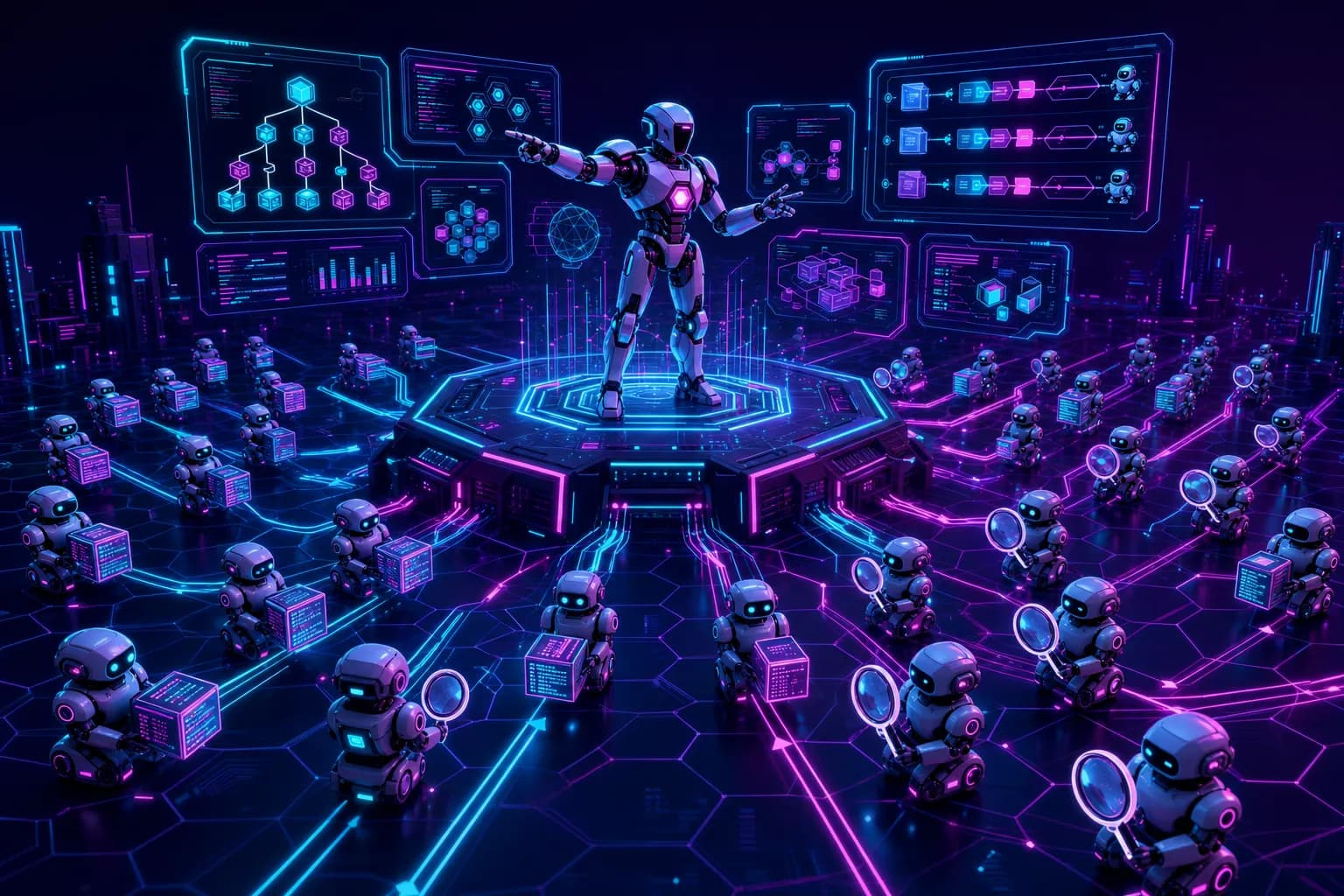
The new way: Opus 4.8 becomes the Main Agent. It doesn't do the work.
It manages the work.
Here's the five-step loop, and every step matters:
1. Decompose. You give it a prompt — "Refactor this repo from Express to Hono" — and it reads the codebase, identifies the dependency graph, and shatters the task into atomic subtasks. Not random chunks. Subtasks with clear input/output contracts.
2. Orchestrate. It writes its own orchestration scripts. No manual wiring. No DAG configuration. The model generates the coordination logic that determines which subagent gets which piece and in what order.
3. Swarm. It spins up dozens to hundreds of parallel subagents in a single session. Each one owns a specific file or module. They execute simultaneously.
4. Attack. This is the part that should make you sit up. It launches adversarial agents — red-team subagents whose entire job is to hunt for bugs, race conditions, type mismatches, and logic errors in the code the other subagents wrote.
5. Consolidate. It gathers the verified, adversarially-tested output into one coherent final result.
Step four is the philosophical break. Self-review is one thing. Every junior dev reviews their own code and thinks it's fine. But deliberately spawning agents to adversarially break the work before it reaches you — that's a different engineering culture entirely.
It's the move from "trust the model" to "make the model prove it."
That's not a feature. That's a paradigm shift wearing a changelog entry as a disguise.
Ultra Code: Autonomy at the Resourcing Level
Layered on top of Dynamic Workflows is Ultra Code mode — an "Extra High" effort tier that shipped in the same May 30th release.
The interesting design choice: you don't set the concurrency. You don't configure the fan-out. The orchestrator looks at the problem and makes the call itself.
Small fix? It stays lean — one agent, fast turnaround. Repo-wide refactor? It goes wide — 50, 100, 200 subagents tearing through files in parallel.
That's autonomy at the resourcing level, not just the execution level. The model isn't just deciding how to solve the problem. It's deciding how much compute the problem deserves.
I ran a test: asked it to migrate a 150-file Laravel project from PHP 8.1 to 8.3 with strict types. Ultra Code deployed 34 subagents. The migration completed in 11 minutes. The same task took me two afternoons on 4.7.
But here's the catch.
The Token Problem: This Burns Like Jet Fuel
Anthropic isn't hiding the cost. Neither will I.
Running 34 parallel subagents for 11 minutes consumed roughly 2.3 million tokens. At current pricing, that's about $34 for a single session. For a one-off migration, that's a steal — two afternoons of my time costs a hell of a lot more than $34.
But scale that pattern across a team of 8 engineers, each running 3-4 Ultra Code sessions a day, and you're looking at $400-500/day in token spend. That's $10K/month. Before you've shipped anything.
The flat-rate, all-you-can-eat era of AI is over. It ended the moment agents started consuming actual compute at scale. Dynamic Workflows just makes that trade-off impossible to ignore — you're explicitly buying speed with tokens.
The question isn't whether the AI can do the work. It's whether the value scales faster than the bill.
For a $200K/year senior engineer, the math works out if Ultra Code saves even 5 hours a week. For a startup burning runway, you need to model your token spend before you turn this on in production.
A note on the compute claims: One source I found claims Anthropic solved its capacity crunch via a deal with xAI and access to the "Colossus" supercomputer. I can't verify this — it doesn't line up with Anthropic's known infrastructure partnerships with Google Cloud and AWS. File it under "rumor" until there's a primary source.
The Demo: Brilliant and Braindead in the Same Breath
The best way to understand a model is to watch it fail and succeed in the same session. Opus 4.8 delivered both.
The Logic Faceplant
The prompt: "I need to wash my car. The car wash is 50 feet away. Should I walk or drive?"
Opus 4.8, cranked to maximum effort: "Walk."
Wrong. Spectacularly wrong, and in an instructive way.
If you walk to the car wash, the car stays in the driveway. You can't wash a car you didn't bring. The model missed the implicit physical chain — the prompt says "wash my car," which requires having the car with you, which means driving is the only answer that satisfies the actual goal.
The failure is revealing. The model pattern-matched on "50 feet = short distance = walk" without reasoning through the physical dependency chain. These trigger-logic puzzles still expose the gap between statistical pattern matching and actual common sense.
A six-year-old would get this right. A $100B AI company's flagship model doesn't.
The Coding Win
Then they asked it to build a 3D soccer game in Three.js.
It produced working code — functional physics engine, player controls with a Shift-to-charge kick mechanic, ball trajectory simulation, score tracking, and a fully rendered 3D scene. Playable in a browser. Generated in under 60 seconds.
That's a complex front-end application with multiple interacting systems — rendering, physics, input handling, game state — produced as a single coherent output.
That contrast is the whole story of frontier models in 2026: superhuman at structured, generative coding tasks. Still tripping over a riddle that would stump a kindergartner.
The gap between capability and judgment isn't closing. It's widening.
What This Means If You Build Software for a Living
Strip away the hype. Here's the read for practitioners who ship code.
For Large Codebases
The orchestrator-plus-adversarial-subagents pattern is the most credible attempt yet at making AI-driven refactoring trustworthy at scale. The key insight: the self-attack step matters more than the swarm size.
I'd rather have 10 subagents with adversarial verification than 200 subagents with self-review. The adversarial layer is what turns "AI-assisted" from a marketing claim into an engineering practice.
If you're maintaining a codebase with 500+ files and dreading the next major refactor, this is the first tool that might actually make it tractable.
For Budgets
Model your token spend before you enable Ultra Code in production. The math works for high-value, time-sensitive work. It doesn't work for routine tasks — don't deploy a 200-agent swarm to fix a CSS alignment issue.
The rule of thumb: if the task would take a senior engineer more than 4 hours, Ultra Code probably has positive ROI. Under that, use standard mode.
For Everyday Reasoning
Keep your guardrails. The car-wash failure is a reminder that raw computational capability and reliable judgment are still two completely different axes.
Don't trust the model's output just because it came from a swarm. The adversarial layer catches code bugs. It doesn't catch reasoning failures in the prompt interpretation layer.
The Bigger Picture: Agent Infrastructure, Not Smarter Chatbots
Opus 4.8 isn't really a "smarter chatbot" release.
It's an agent infrastructure release dressed up as a model bump.
Anthropic is making a clear architectural bet: the frontier moves forward not by cramming more intelligence into one forward pass, but by orchestrating many specialized agents — including agents whose sole purpose is to tear other agents' work apart.
That's not incremental improvement. That's a different philosophy of how AI systems should be built.
For web development, for financial analytics, for large-scale code migration — the pattern of decompose, orchestrate, swarm, attack, consolidate is a genuinely different way to ship software. It's the difference between a solo developer and a well-run engineering team.
The solo developer is faster for small tasks. The team is faster for everything else.
The Catch Nobody's Talking About
There's a risk buried in this architecture that I haven't seen anyone address.
When the orchestrator writes its own coordination logic, you're trusting the model to build the system that verifies itself. The adversarial agents are spawned by the same model that spawned the original agents. It's self-policing at the infrastructure level.
In security, we call that a conflict of interest.
I'm not saying it doesn't work — the demos are compelling, and my own testing showed real improvements. But the long-term reliability of a system where the judge and the judged share the same weights is an open question.
Something to watch.
The Takeaway
Opus 4.8 shipped on May 30th, 2026, six weeks after 4.7. It brought Dynamic Workflows, Ultra Code, 2.5x faster generation, and an adversarial verification layer that changes how you think about AI-generated code.
It still can't figure out that you need to drive a car to a car wash.
But for the engineer building real systems — the kind with 500 files, legacy debt, and a deadline — it's the most powerful tool I've used. Not because the model is smarter. Because the architecture is smarter.
The question isn't whether AI can write your code. It can.
The question is whether you can afford the army that writes it well.

Bashar Ayyash (Yabasha)
AI Systems Architect for regulated industries — evals, harness design, AI security.
Bashar Ayyash is an AI engineer and dev lead in Amman, Jordan. 20 years shipping software, 4 years inside a regulated bank building production RAG and agent systems with evals, guardrails and monitoring — in Arabic and English. He writes at yabasha.dev and builds open-source tooling for AI-assisted development.
Newsletter
Practical AI + full-stack insights for MENA builders. No spam.
Related Articles
Graph Engineering Is Mostly Airflow With A New Coat Of Paint
Your Call Logs Are the Only Training Data That Actually Matters

AI Agents Ate My Boilerplate: What Actually Works in Enterprise Banking
You're Already an AI Manager — Just No One Updated Your Contract
Read more on the blog
Browse the latest articles or explore the full archive.